
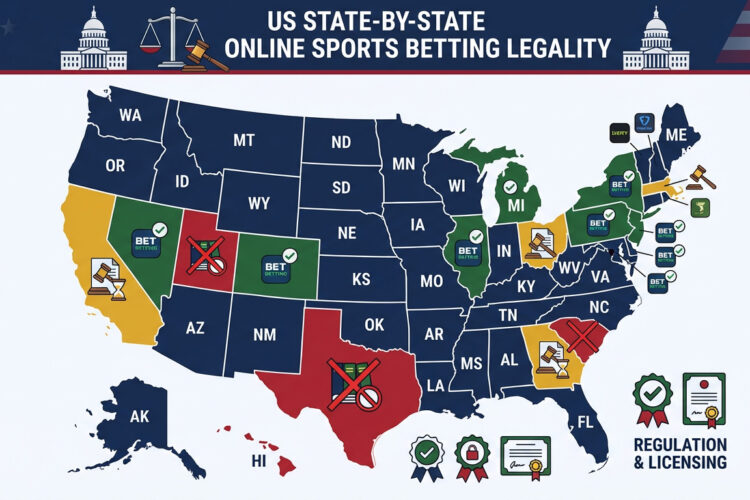
Evaluating the Legality of Online Sports Betting Across States
Navigating the landscape of online sports betting across states involves understanding the complex web of state regulations and federal oversight. Each state has its own set of laws governing online sports betting, which can sometimes conflict with federal statutes. Staying compliant and avoiding legal issues requires a thorough understanding of these laws and how they interact. As the online betting industry grows, it is crucial to stay informed about the evolving legal landscape to ensure adherence to regulations.
State-by-State Legal Frameworks
In the realm of online sports betting, the legal landscape varies significantly from state to state due to the unique legal frameworks established by each jurisdiction. States hold the authority to regulate sports betting within their borders, leading to a diverse array of laws and regulations governing this activity.
Some states have opted to permit online sports betting, allowing licensed operators to offer their services to residents, while others maintain stringent prohibitions on such activities.
Before engaging in online sports betting, it’s crucial to understand the specific rules and regulations in your state to ensure compliance with local laws. Factors such as licensing requirements, the types of bets permitted, and age restrictions can differ significantly from one state to another.
Therefore, staying informed about the legal framework governing online sports betting in your area is essential to avoid any potential legal issues.
Federal Regulations Impacting Online Betting
Navigating the online sports betting landscape requires an understanding of both state-specific regulations and the influence of federal laws on the industry.
The main federal law that previously impacted online sports betting was the Professional and Amateur Sports Protection Act (PASPA), which was overturned by the Supreme Court in 2018. This decision allowed individual states to legalize sports betting within their borders.
While there’s no comprehensive federal regulation solely governing online sports betting, laws such as the Federal Wire Act of 1961, the Unlawful Internet Gambling Enforcement Act (UIGEA) of 2006, and the Federal Sports Bribery Act can still have implications for the industry.
It’s important for operators and bettors to remain informed about these federal regulations to ensure compliance and adherence to legal standards.
Interstate Compacts and Agreements
Interstate compacts and agreements are key mechanisms in the realm of online sports betting, fostering collaboration and standardization among states that have authorized this activity. These compacts establish a framework for shared liquidity, allowing operators to offer their services across state borders.
Through these agreements, states can increase the size of their player pools for online sports betting, which can result in higher revenues and enhanced competition within the market. Furthermore, interstate compacts aid in aligning regulations and enforcement practices, promoting fairness for both operators and bettors.
In essence, these agreements play a crucial role in creating a unified and efficient online sports betting environment across multiple states.
Challenges in Enforcement and Compliance
Enforcing compliance with regulatory frameworks in the realm of online sports betting presents substantial challenges. One key obstacle is the complexity of monitoring and enforcing compliance across state borders. Each state has its own distinct rules and regulations pertaining to online sports betting, making it a demanding task to ensure that both operators and bettors adhere to these diverse requirements.
Moreover, the digital infrastructure of online sports betting platforms complicates the verification of users’ age and location with precision. The absence of a unified enforcement mechanism further adds to the difficulties in maintaining compliance. Consequently, regulatory authorities encounter persistent challenges in effectively enforcing and ensuring adherence to the array of regulations governing online sports betting practices.
Future Trends and Predictions
Analyzing the future trajectory of online sports betting involves considering several key factors influencing the industry’s development. Some trends and predictions to note include:
- The ongoing legalization of online sports betting in more states, expanding the market and increasing accessibility for consumers.
- Continuous advancements in technology to improve user experience and engagement, such as mobile betting apps, virtual reality integration, and personalized betting options.
- Anticipated collaborations between sports leagues and betting operators to create synergies and capitalize on each other’s strengths, potentially leading to exclusive content and promotions.
- Stricter regulations being implemented to safeguard consumer interests, ensure fair play, prevent problem gambling, and maintain the integrity of sports betting.
- The expected growth of live betting options and the integration of betting platforms with streaming services, offering a more interactive and immersive experience for users.
Conclusion
In conclusion, understanding the legality of online sports betting across states necessitates thorough research and awareness of the specific regulations in each jurisdiction. The differences in legal frameworks, licensing requirements, and enforcement mechanisms pose challenges for both operators and bettors, emphasizing the importance of staying informed to ensure compliance and mitigate legal risks. Given the evolving nature of the online sports betting landscape, staying abreast of future trends and industry developments is crucial for all stakeholders involved.